Why the Month-End Close Is Always Late, and It Is Never the Closing

Ask a finance team why the close ran late and you will rarely hear that closing took too long. You hear that receipts came in late. That two accounts did not match and nobody could say why. That the approval sat with a director who was travelling.
This is the most expensive misunderstanding in small-business finance. Teams try to fix the close by working harder in the last week, when every one of the real causes happened in the three weeks before it.
Where the days actually go
- Documents arrive late, and badly. A receipt photographed into a chat thread is not yet a record. Someone has to make it one, and that someone is usually the most expensive person available.
- Mapping gets re-decided every month. The same supplier is coded three different ways across three months, because three different people coded it and none of them saw the others.
- Exceptions hide until the last afternoon. Two unmatched transactions out of a hundred and twenty-eight is not a crisis in week one. It is a crisis when it surfaces at 4pm on the final day.
- Approvals queue behind one person. The work is finished and simply waits, which is the most frustrating category because nothing is wrong with it.
None of these are accounting problems
They are handoff problems wearing accounting clothes. Each one is a moment where information has to move from a person to a system, or from one person to another, and the move is manual.
That is why hiring another bookkeeper rarely fixes a late close. It adds capacity to the last week, when the shortfall was distributed across the thirty days before it. The team gets faster at assembling and no faster at receiving.
Move the work to where it is created
The fix is not a faster close. It is capturing each record at the moment it happens, mapping it against a rule approved once rather than re-argued monthly, and surfacing exceptions on the day they appear rather than on the last day of the month.
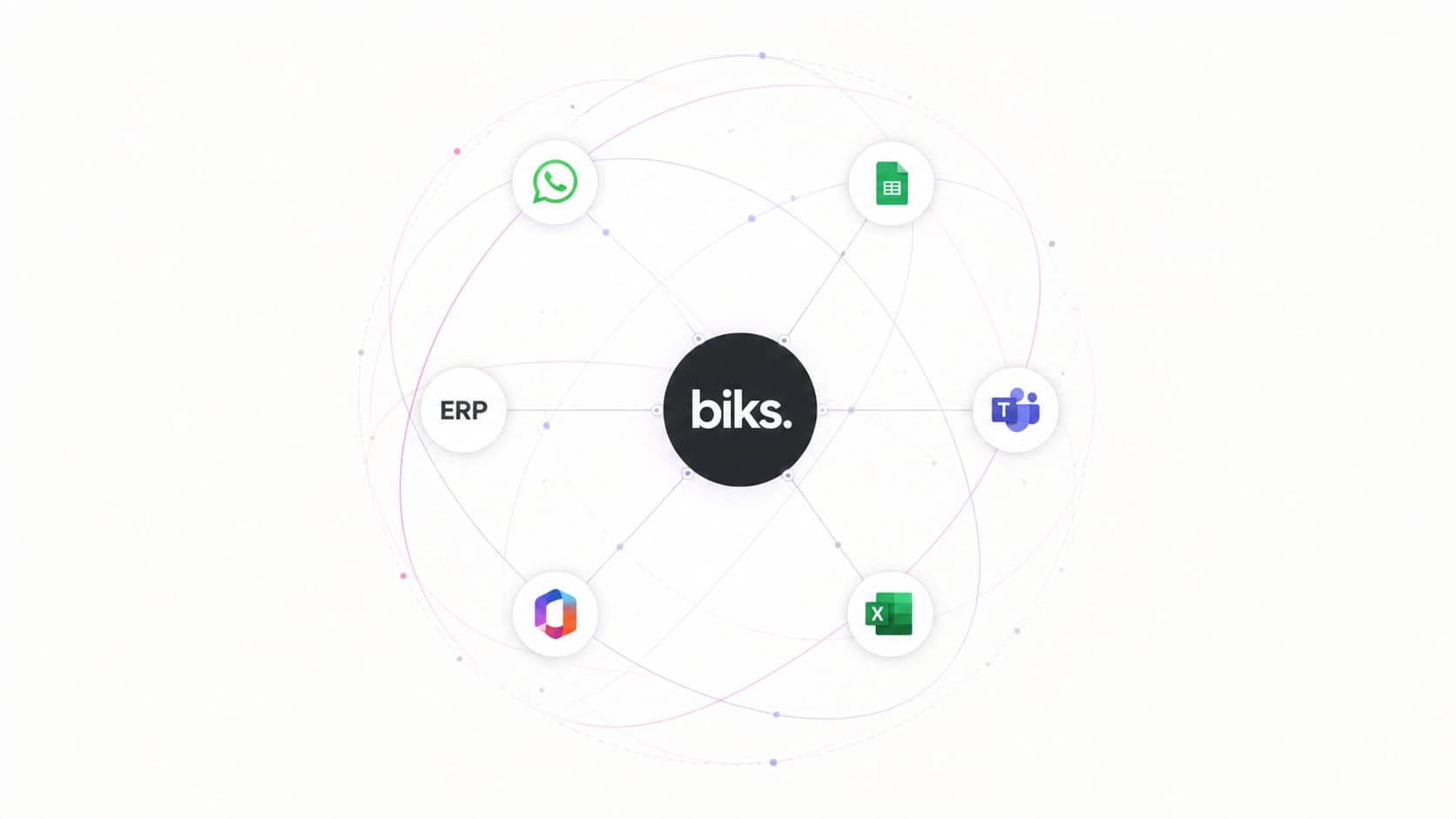
That is what the reconciliation workflow looks like when Biks runs it. A receipt shared in WhatsApp is read, validated, mapped to your chart of accounts, matched against the bank line, and either filed or flagged for the person who can resolve it. Mappings follow deterministic rules approved for your books; when a document is unclear or falls outside those rules, it asks rather than guesses.
By month end, the team reviews a close instead of assembling one.
What changes, in numbers
One Biks client in professional services had four people spending more than twenty hours a week on reconciliation. That work now takes under thirty minutes, with fewer manual mapping errors and an earlier close.
The month did not get easier. The thirty days before it did, which is the only way a close date ever moves.
How to tell if this is your problem
- Count the chase messages. If the last week of the month is mostly asking people for documents, the close is not your bottleneck. Collection is.
- Look at when exceptions are found. Exceptions discovered in the final two days were almost always created weeks earlier.
- Check how often mapping is debated. If the same supplier raises the same question twice, the rule was never written down.
Common questions
- Why is the month-end close always late?
- Usually because of handoffs, not accounting. Source documents arrive late and unstructured, account mapping is re-decided each month, exceptions surface only in the final days, and approvals queue behind one person. All four causes occur in the weeks before the close, not during it.
- Will hiring another bookkeeper fix a late close?
- Rarely. It adds capacity to the last week, when the shortfall was spread across the thirty days before it. The team gets faster at assembling the close and no faster at receiving the documents and approvals it depends on.
- How does automated reconciliation actually work?
- Each source document is captured when it is created, validated, mapped to your chart of accounts using rules approved once for your books, and matched against bank activity. Anything unclear or outside the rules is routed to a person rather than guessed, so the team reviews exceptions rather than rebuilding the close.
- How much time can reconciliation automation save?
- One Biks client in professional services reduced reconciliation from more than twenty hours a week across four people to under thirty minutes, with fewer manual mapping errors and an earlier close.