Xero Missing Features: 5 Jobs Still Need a Person
Xero's missing features for Singapore SMEs are real but narrow: no native Singapore payroll, no rule-based bill approvals, light inventory, two active reporting dimensions, and reconciliation that still stops at ambiguous lines. My argument: these are mostly human handoffs around the ledger, and none is a reason to leave Xero.
I run Biks across Singapore and Indonesia, and I spend a lot of time looking at the spreadsheet that sits beside an SME's accounting software. That spreadsheet is the honest map of what the software does not do. With Xero, almost everything on that map lives at the edges, where a document arrives, a rule has to be applied or someone has to make a call. Very little of it lives in the books themselves.
The ledger is not the problem
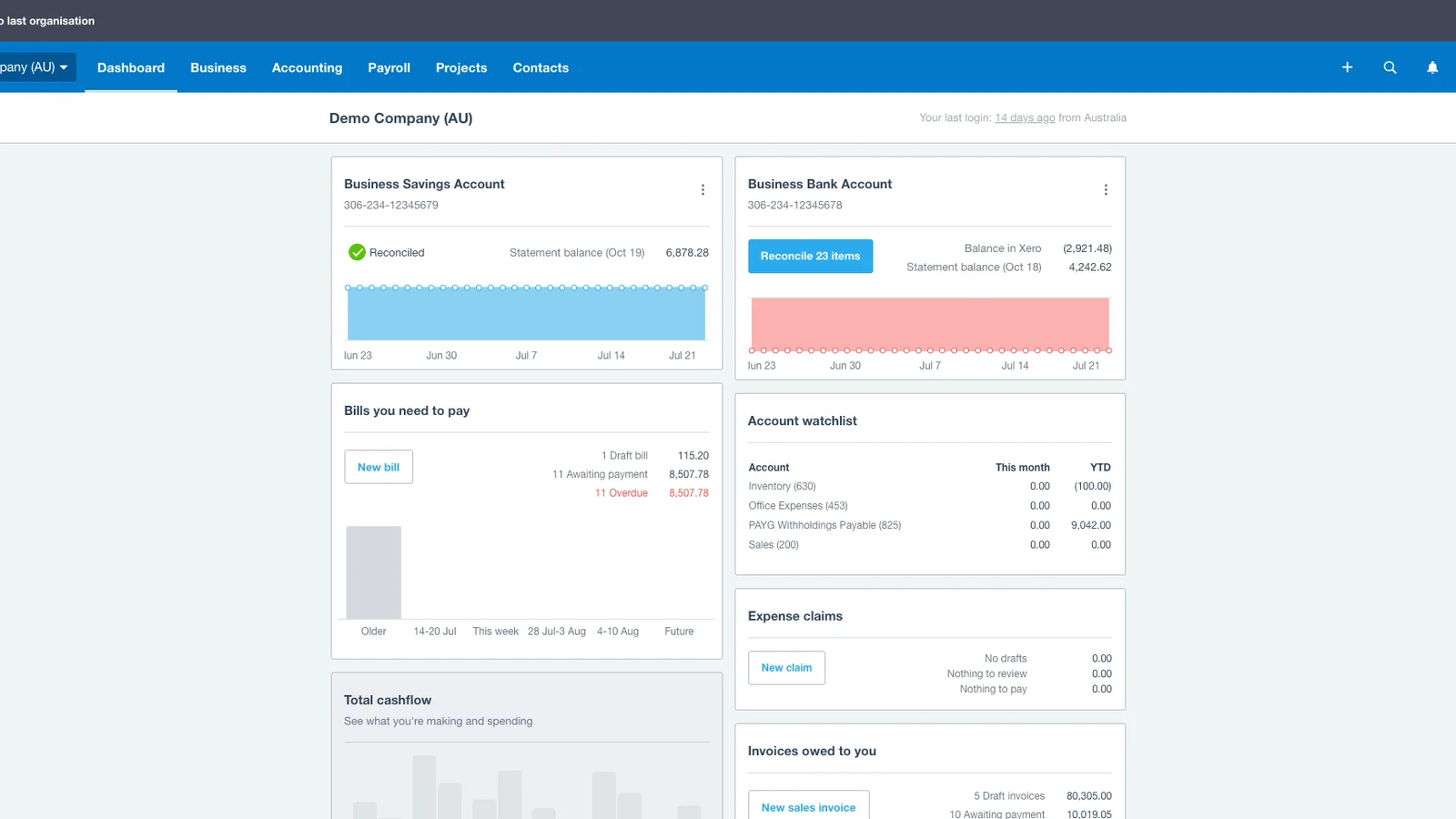
Start with what Xero already does, because most owners underuse it. Xero's Singapore pricing page, as of October 2026, includes invoices and quotes, bill entry, Smart Document Capture, bank reconciliation and real-time reports on all three plans. Standard and Premium add bulk reconciliation and auto-reconciliation in beta; Premium adds multiple currencies. Employee expenses and project tracking are optional paid add-ons on every plan.
Tax is covered too. Xero Central says Xero connects a Singapore organisation to the InvoiceNow network through Invoici, so it can send and receive e-invoices and submit the required transaction data to IRAS. I would not pay anyone to rebuild that route before checking the native setup.
That is the accounting core: a record you can trust, documents attached, banks feeding in, reports on demand. When people tell me Xero is missing something, they are rarely describing a hole in that core. They are describing the work that happens before a number gets there, or after it lands.
Five gaps, one pattern
Take payroll. Xero's Singapore payroll page says a business needs a connected third-party app for pay calculations, deductions and local reporting; Xero then records the result. That is not Xero failing at accounting. It is Xero declining to own a specialist job with local compliance rules, and pointing you to products that do.
Bill approvals follow the same shape. Xero Central shows bills moving through draft, submitted and approved. If routing depends on amount, department, entity or a purchase order, Xero directs you to accounts-payable apps. The gap is the policy, the who-approves-what, not the bill.
Inventory is the clearest case. Tracked inventory in Xero records quantity, average cost and cost of goods sold for straightforward items. Xero Central itself recommends an inventory app for ecommerce orders, purchase-order receipting, more than 4,000 tracked items, manufacturing or assembly components. Warehouses produce events; ledgers record outcomes.
Then the two quieter ones. Xero allows four tracking categories in total and only two active at once, so a business that wants to see departments, locations and projects together will hit a wall. And reconciliation, for all its suggested matches, bank rules and beta auto-reconciliation, still leaves unmatched and ambiguous lines for a person. Read all five together and the pattern is plain: each gap is a place where a specialist rule set applies or a human has to decide.
Judgement belongs with a named person
This is the part of the argument I care most about. Even if every gap were filled by software tomorrow, some decisions should stay with someone you can name. When several transactions plausibly match one bank line, a person should pick and check the supporting record. When a purchase is out of policy, a receipt is missing or a supplier changes bank details, a person decides. Starters, leavers, unusual allowances and final pay need a payroll owner. Damaged stock and late receiving need an operator who can find out what happened. Mapping changes, accruals and the explanation to management belong to finance.
So the job of a good tool here is to remove preparation while preserving responsibility. If an automation hides its source evidence or cannot show why a line was flagged, it has made review harder, even when it saves clicks. The person should stop retyping and chasing, not stop deciding.
The closest proof we have is Law Firm Bank Reconciliation: 20+ Hours to Under 30 Minutes. Four people had spent more than twenty hours a week on reconciliation; the recurring work now takes under thirty minutes to review. The accounting record stayed exactly where it was. What shrank was the repeated matching job around it, and review stayed with the team.
So why not just switch?
The case for leaving deserves a fair hearing. Xero's Singapore notice says Starter, Standard and Premium move from S$39, S$70 and S$95 a month to S$42, S$77 and S$99 on 1 November 2026, including GST and excluding add-ons. Stack a payroll app, an approval app and an inventory app on top, and an owner can reasonably ask whether one bigger system would be simpler than four connected ones. There is a real cost to every extra subscription: setup, training, oversight and maintenance. A cheap tool that creates a second queue can cost more than the manual step it replaced.
I accept all of that, and it still does not get you to switching. The price change may justify a plan review, but it does not change which workflow gaps exist. A new ledger would not make payroll less specialist, approvals less policy-driven or ambiguous bank lines less ambiguous. You would carry the same handoffs into a migration, with less history and more risk.
There is a point where switching is right: when the ledger itself no longer fits your statutory, entity, reporting or transaction needs, and several workarounds have failed in a controlled test. Make that call with your accountant, after testing migration, controls and reporting. Do not make it because one peripheral feature is missing.
Build the smallest thing that removes the repeat
My rule is to reach for the least software that removes the repeated work. First tidy the process: kill duplicate spreadsheets, name the authoritative record, give every exception an owner. Then use what Xero already has, bank rules and native reconciliation included. For a complete specialist job like Singapore payroll, connect a specialist app. For a simple, visible handoff, a status change that sends a reminder or an approved item that creates a task, Zapier or Make is often enough, as long as it is safe to retry and a person still approves anything that moves money.
A small custom workflow earns its place only when the hard part is judgement on messy inputs: evidence from several systems, duplicate prevention, several approval conditions. Keep the scope testable. "Automate finance" is not a job. "Prepare unmatched bank lines with their candidate invoice and source document for daily review" is.
And measure it against the real alternative, which is usually hiring another administrator. A person handles judgement and changing situations; software is strongest at repeated preparation. If most of that new role would be copying fields and chasing routine evidence, fix the workflow first. That is where Biks finance and accounting automation starts: the workflow map, and the exact point where a person must approve.
Xero is not missing a ledger. It is missing the handoffs around one, and those are cheaper to fill than a ledger is to replace.
Sources
- Xero: Pricing Plans for Singapore
- Xero: Upcoming Xero Price Changes in Singapore
- Xero: Payroll Software for Small Businesses in Singapore
- Xero Central: Add and Approve a Bill
- Xero Central: About Tracked Inventory in Xero
- Xero Central: Set Up Tracking Categories and Options
- Xero Central: Reconcile Your Bank Account
- Xero Central: E-Invoicing with Invoici Explained
Common questions
- What features are missing from Xero for Singapore SMEs?
- As of October 2026, the main Xero gaps for Singapore SMEs are native Singapore payroll, rule-based bill approval workflows, complex inventory operations, more than two active reporting dimensions and fully hands-off reconciliation of ambiguous bank transactions. Xero can remain the accounting record while an add-on or controlled workflow fills one of these gaps.
- Does Xero include payroll for Singapore?
- No native Singapore payroll workflow is included. Xero's Singapore payroll page says a business needs to connect a third-party payroll app for pay calculations, deductions and local reporting, after which payroll data can flow into Xero's accounting records.
- Can Xero automate bill approvals?
- Xero supports draft, submission and approval states for bills. For automated routing based on amount, department, entity, purchase order or other policy conditions, Xero directs users to accounts-payable apps, or an SME can add a narrow approval workflow around Xero.
- Does Xero reconcile every bank transaction automatically?
- No. Xero can suggest matches, apply bank rules and, on Standard and Premium, use beta auto-reconciliation. A person still needs to review ambiguous matches, transactions with no match and exceptions where the accounting evidence is incomplete.
- Should an SME switch away from Xero because of a missing feature?
- Usually no. Keep Xero when its ledger, InvoiceNow and reporting functions fit, then use its own add-on, a specialist connected app, Zapier, Make or a small custom workflow for the specific gap. Consider switching only when the accounting core itself fails several tested requirements.