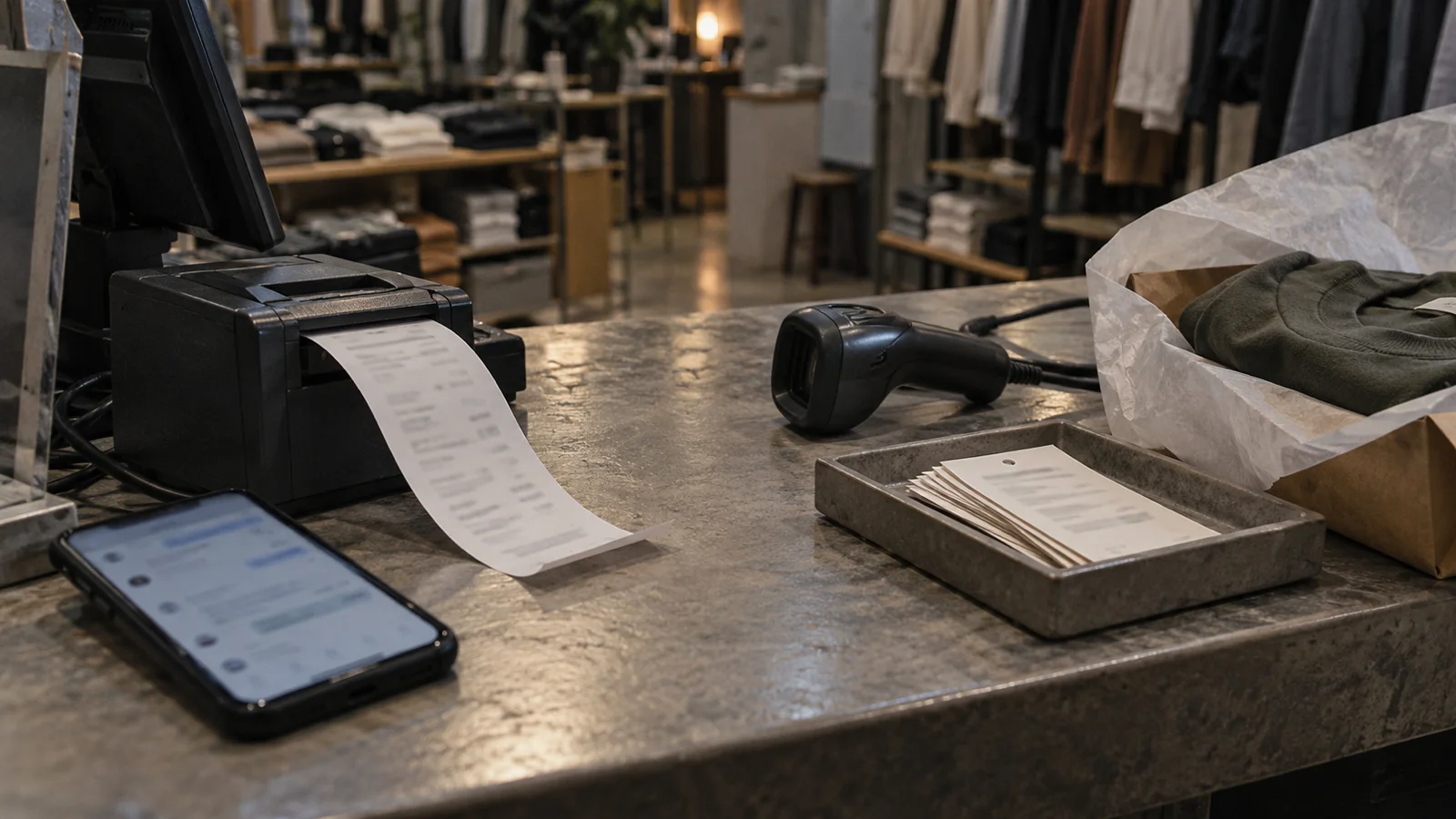
AI Shopping Agents: DoorDash Has Only Hundreds of Orders
Customers can now ask an AI assistant to find lunch, build a cart and place the order. The surprising part is how rarely that last step happens: DoorDash chief executive Tony Xu told investors that third-party AI agents had generated only several hundred orders in total.
That does not make AI shopping irrelevant. Shopify says 65% of shoppers in its 2026 holiday survey expect to use AI for at least one shopping task. Yet only one-third said they trusted an agent to buy for them. Discovery is moving faster than delegated checkout, and checkout is moving faster than the messy work after it.
After building customer systems for food, retail and professional-services businesses, I think the useful question for an SME is smaller. Can a machine see the right item, price and availability, and can your team fulfil what it promises? The sale is won or lost in that handoff.
AI shopping agents have a conversion gap
These figures measure different parts of the journey, so they should not be combined into one conversion rate. Together they show where evidence is strong and where the hype still outruns the orders.
| Dated signal | Published figure | What it actually shows | What is missing |
|---|---|---|---|
| DoorDash earnings call, 29 Oct 2026 | Several hundred third-party agent orders in total | Completed orders remain a low-volume use case | Agent names, start date and exact order count |
| DoorDash Ask, Jun-Aug 2026 | More than 40,000 new restaurants discovered | DoorDash's own assistant can widen discovery | Total Ask users, orders and a non-user comparison |
| Shopify holiday survey, Oct 2026 | 65% plan an AI shopping task; one-third trust an agent to buy | Research interest is ahead of autonomous purchase | Southeast Asia country cuts and observed checkout volume |
The several-hundred figure came from DoorDash's SEC-filed Q3 earnings transcript. Xu called volumes very low twice and said customers still go directly to DoorDash for everyday food orders. The company did not identify the agents, the measurement window or the exact denominator. “Several hundred” is a disclosure, not a market share.
DoorDash also has evidence on the other side. Its own September launch post says Ask DoorDash helped users discover more than 40,000 new restaurants from June through August. That is a discovery count, not an order count. It supports the claim that conversational search can surface unfamiliar merchants, while leaving the checkout rate unanswered.
The hard part starts after the recommendation
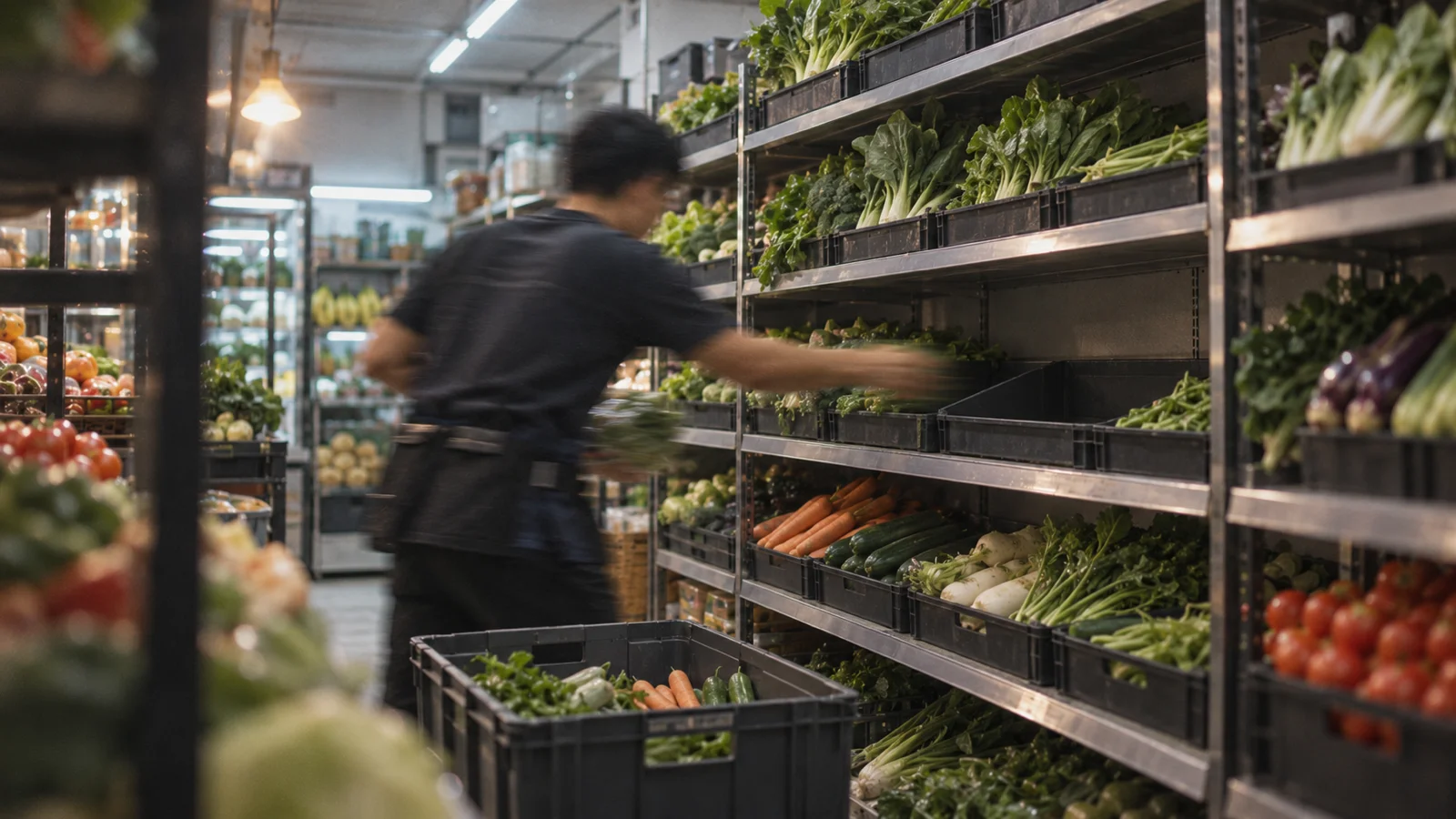
DoorDash's best evidence against a quick agent-commerce boom comes from its own operations. Xu said deliveries from third-party stores reach accuracy in the low 90s, while DoorDash's inventory-controlled DashMarts are near perfect. The company did not publish the exact rates, but it named stockouts as a key cause of the gap.
An assistant can recommend the right cereal and still create the wrong experience if the shelf is empty. The merchant then needs a substitute, a price decision, customer approval, a revised total and a delivery update. Those are operational decisions, not search results.
OpenAI's commerce documentation makes the same boundary visible. As of November 2026, merchants remain responsible for the current catalogue, inventory, prices, taxes, shipping options, payment, acceptance, returns and fulfilment. The agent can carry the request. The merchant still owns the truth.
The recommendation is cheap. Keeping the promise is the product.
“The hard part is making sure that they actually show up, and show up in the way that you expected.”
Singapore is ready for online orders, not blind checkout
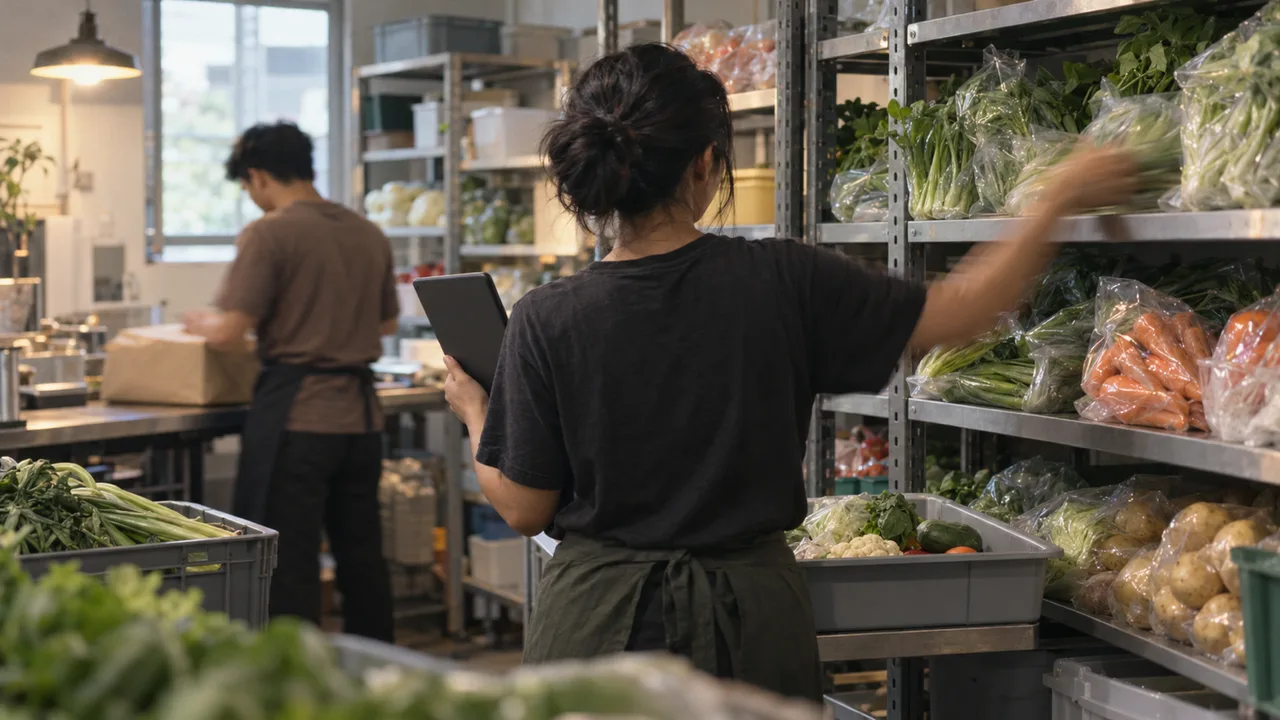
Singapore retailers already handle orders across websites, marketplaces and messaging. That does not mean shoppers want an agent to spend for them. It means the order data must stay consistent when another discovery channel appears.
For a Singapore retailer, the weak link may be a promotion that differs between the website and the store. An agent magnifies the record it receives. Clean data creates reach; stale data creates refunds.
The local opportunity is not to copy an American food-delivery interface. It is to make the order survive messaging, checkout, payment and delivery without somebody retyping it.
The money is still missing from the headline
DoorDash did not disclose a fee, commission or revenue-sharing agreement for orders coming from third-party agents. Xu said advertising opportunities may emerge, but linked that possibility to higher volume. There is no published number to model yet.
OpenAI's current commerce guide says merchants use their existing payment provider and remain the merchant of record. Its original 2025 Instant Checkout announcement said merchants pay a small fee on completed purchases, but did not publish the rate. The November 2026 guide also limits embedded checkout to approved partners. A merchant cannot calculate a full acquisition cost from those pages alone.
Our read: do not budget from the traffic promise. Track the whole order: assistant referral, accepted cart, payment cost, substitution, support time, refund and completed delivery. Compare that with the same order from search, a marketplace or WhatsApp. Until the channel publishes both volume and fees, a custom build is an experiment, not a sales forecast.
An order source earns its place only after the margin survives the handoff.
Fix one order flow before adding another channel
- 1. Test what an assistant says today. Ask five real customer questions about one product. Record wrong prices, missing variants, old availability and unclear delivery terms. Fix the source page or catalogue first.
- 2. Follow one order to delivery. Mark every retyped field, stock check, payment proof, approval and customer update. Give each exception a named owner.
- 3. Keep consequential choices with a person. Let the workflow prepare substitutions, refunds or unusual delivery changes. Require a person to approve them before the customer is charged or promised a result.
- 4. Measure completed orders, not chats. Count accepted orders, fulfilment errors, refunds, handling minutes and repeat purchases. A fluent recommendation is not a business outcome.
The closest Biks proof is Rosalie: WhatsApp Order Automation, Replies Under 30 Seconds. Its published case study reports that the team saves two hours of admin each day while keeping approval over exceptions. Those are Rosalie's results, not a promise for every retailer.
That flow started with the job after the message: product questions, the order, payment confirmation and delivery. The same discipline applies to AI shopping. Start with one completed order, then decide whether another discovery channel deserves access to it.
What to watch after the 2026 holiday season
First, DoorDash's Q4 2026 results should show whether third-party agent orders move beyond several hundred and whether the company finally gives a time window. Second, watch whether its limited corporate-ordering beta, opened on 30 September, expands beyond company lunch and restocking use cases.
Third, check OpenAI's commerce pages for a published merchant fee and wider access beyond approved partners. Fourth, look for Shopify's post-holiday observed order data. Its current 65% figure measures stated intent, while DoorDash's disclosure measures completed orders. The distance between those two numbers is the story.
For SME owners, there is no reason to wait. Make the catalogue current, expose real stock, define who approves exceptions and measure fulfilment. If agent orders grow, you are ready. If they do not, the same work still improves every order you already have.
AI may bring the customer to the counter. Operations still decides whether they come back.
Sources
- U.S. Securities and Exchange Commission: DoorDash Q3 2026 earnings call transcript
- DoorDash: Skip The App: Now You Can Just Text DoorDash
- DoorDash: DoorDash brings office ordering to the AI tools teams already use
- Shopify: Welcome to the first holiday season of the agentic era
- OpenAI: Key concepts for Agentic Commerce
- OpenAI: Buy it in ChatGPT: Instant Checkout and the Agentic Commerce Protocol
Common questions
- How many DoorDash orders have AI shopping agents placed?
- DoorDash chief executive Tony Xu said on 29 October 2026 that third-party AI agents had generated several hundred orders in total. DoorDash did not disclose the exact count, agents involved or measurement period.
- Are AI shopping agents already mainstream?
- No. Shopify reports strong research intent, with 65% of its 2026 holiday survey respondents planning at least one AI shopping task, but only one-third trusted an agent to buy for them. DoorDash reports only several hundred completed third-party agent orders.
- What should an SME prepare for AI shopping agents?
- Keep product descriptions, prices, variants, availability, shipping and returns current. Define who approves substitutions, refunds and unusual deliveries, then measure completed orders, errors, handling time and refunds across every channel.
- Should an SME build an AI shopping integration now?
- Usually only as a bounded experiment. Fix the existing catalogue-to-fulfilment flow first, because agent platforms still publish limited order volume, partner access and fee detail. The same operational work also improves search, marketplace and WhatsApp orders.