
Mistral Large 4: A US$0.70 API With a 1T Catch
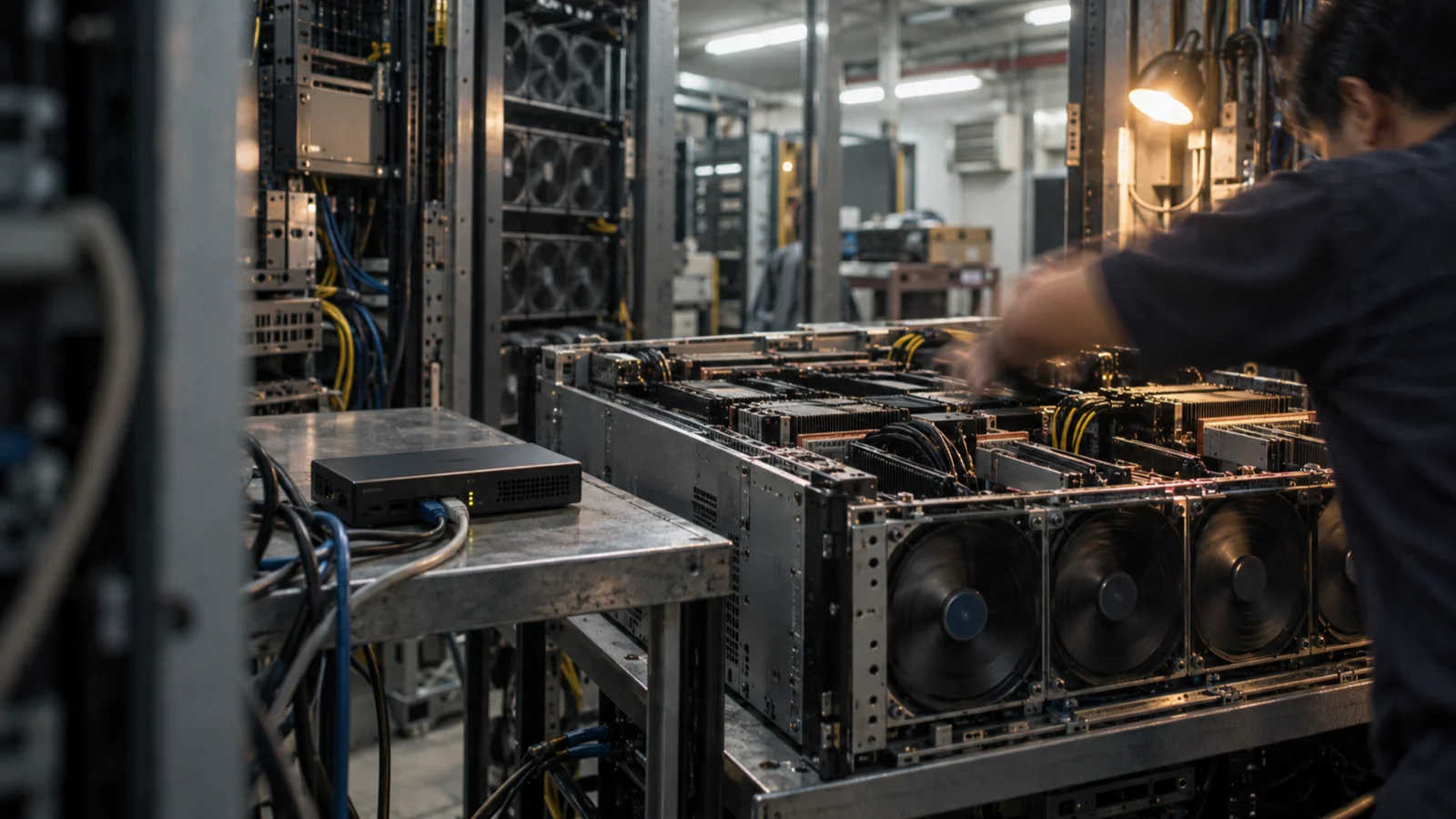
Mistral Large 4 is now open weight, so companies can download and control the model. For most SMEs, the useful offer is still the hosted API at US$0.70 per million input tokens, because operating a 1-trillion-parameter model is a separate and much larger job.
That distinction matters in Singapore and global markets, where smaller firms are still deciding which workflow deserves AI at all. Mistral has opened the model. It has not removed the cost of turning model access into a reliable customer, finance or executive workflow.
Open weights change control, not the bill
The release has three layers: the downloadable weights, the hosted API and the finished workflow a business actually uses. Their costs are different.
| Published measure | Figure as of October 2026 | What it tells an SME | What is still missing |
|---|---|---|---|
| Open-weight release | 29 Oct 2026 | The model can be downloaded, adapted and run under the published licence | A complete operating budget for self-hosting |
| Model size | 1 trillion total parameters; 52 billion active | It is far beyond a normal office computer deployment | Mistral does not publish one universal hardware bill |
| Hosted API input | US$0.70 per 1 million tokens | Usage can start cheaply without owning the hardware | A monthly bill for your workflow, because volume and context vary |
| Hosted API output | US$2.10 per 1 million tokens | Long answers cost more than input | The cost of review, integrations and maintenance |
| Business workflow test | 59.9% on AutomationBench in the 6 Oct preview | The vendor has evidence of progress on multi-step work | Local accuracy, exception rate and staff time saved |
| Cyber Index | 51% in the 29 Oct release | The open model can complete some defensive security tasks | Independent proof for your own data and risk level |
Open weight means the model files are available to inspect, adapt and deploy. It does not include the machines, monitoring, updates, people or business records around them. Mistral says most of its open models use the Apache 2.0 licence, but buyers should still check the exact model card and terms before deployment.
The price headline belongs to the hosted API. Mistral lists US$0.70 for one million input tokens and US$2.10 for one million output tokens as of October 2026. A token is a small piece of text or data processed by the model. The invoice depends on how much context the workflow sends, how long it runs and how often it retries.
Cheap access is useful. It is not the same thing as a cheap finished operation.
The money sits around the model
Mistral trained the preview on 3,800 Grace Blackwell GPUs and says it will support self-deployment. That is evidence that the company has built for large operators. It is also the reason an SME should not read “downloadable” as “runs cheaply in the back office”.
The vendor does not publish one self-hosting price, and that omission is reasonable. Hardware, traffic, response time, redundancy and staff support change the answer. It also means a buyer cannot compare the API and self-hosting from a model card alone.
Our read: control is the strongest reason to consider open weights. Cost is not automatically the strongest reason. A smaller hosted model can be cheaper for one narrow job, while a large self-hosted model can make sense for an organisation with sustained volume, specialist staff and a firm data-location requirement.
The benchmark claim needs a buyer test
Mistral says Large 4 leads open-weight coding benchmarks and scored 51% on the Artificial Analysis Cyber Index after three more weeks of reinforcement learning. Hugging Face reported it as the fifth-best open-weight model on the Artificial Analysis Intelligence Index on 29 October. Those are useful signs, not a purchase order.
The 59.9% AutomationBench score is closer to ordinary business work because the test covers 657 workflows across common apps. The score does not cover every task, and local exceptions are not in the leaderboard. Mistral also ran several evaluations itself, so the release is evidence for the claim and a reason to test it independently.
A florist does not buy a coding rank. A finance lead does not buy a parameter count. They buy fewer missed orders, a faster close or an executive brief that arrives with the source attached.
Mistral Large 4 meets two young AI markets

For a Singapore buyer, the practical choice is between a hosted service and taking responsibility for operating the model. Data handling, approvals and the people who resolve exceptions belong in that decision.
In the systems we build, the result appears after the model call. The WhatsApp ordering case study shows the workflow side. It does not prove that one model wins every task.
Singapore buyers should start with the job, measure the handoff, then choose the smallest capable tool.
What should an SME do now?
- Name one finished job. Pick an outcome such as a confirmed booking, a matched payment or a sourced morning brief. “Use Mistral Large 4” is a technology choice, not a business result.
- Measure the manual baseline. Record staff minutes, volume, error rate and approval time for four weeks. Compare the workflow with Excel or hiring another admin before comparing model rankings.
- Test real exceptions. Use local names, Bahasa Indonesia, Singlish, incomplete orders and changed instructions. A benchmark cannot tell you where your staff will need to take over.
- Ask for the whole monthly cost. Include usage, integrations, monitoring, human review and maintenance. If self-hosting is proposed, ask who operates it and what happens during updates.
- Keep consequential steps approved. Let AI prepare the work, then stop before money moves, a booking is promised or a record is changed. Rapi™ follows the same outcome-first rule for personal work.
What to watch next
- After 31 October 2026: Whether the final model card adds exact deployment profiles, licence detail and reproducible benchmark results.
- At the next pricing update: Whether the US$0.70 and US$2.10 API rates remain, and whether the launch discount language changes.
- In independent evaluations: Whether the 51% Cyber Index and coding lead hold after other open models are tested under the same conditions.
- In your first four weeks: Whether one completed workflow costs less and needs fewer staff minutes. That result matters more than the next leaderboard.
Sources
- Mistral AI: Mistral Large 4 (Le Chonk) is now open weight
- Mistral AI: Introducing Mistral Large 4
- Mistral AI Documentation: Mistral Large 4 model card and pricing
- Hugging Face: Welcome Le Chonk: Mistral Large 4 on Hugging Face
- Mistral AI Help Center: Under which license are Mistral's open models available?
Common questions
- What is Mistral Large 4?
- Mistral Large 4 is a 1-trillion-parameter multimodal AI model with 52 billion active parameters. Mistral released its downloadable weights on 29 October 2026 after a public API preview earlier that month.
- Is Mistral Large 4 free?
- The model weights are downloadable under their published terms, but running the model is not free. A business still pays for hardware, operations and staff, or uses Mistral's hosted API, listed at US$0.70 per million input tokens and US$2.10 per million output tokens in October 2026.
- What does open weight mean?
- Open weight means the trained model files are available to download, inspect, adapt and deploy under a licence. It does not automatically include the training data, application, integrations, computing hardware, monitoring or maintenance needed for a dependable business workflow.
- Should an SME self-host Mistral Large 4?
- Most SMEs should test a hosted service first. Self-hosting Mistral Large 4 can make sense when usage is sustained, specialist operators are available, and control or data-location requirements justify the infrastructure. A narrow workflow should prove its value before that commitment.
- How should an SME evaluate Mistral Large 4?
- Test Mistral Large 4 on one finished job using real local language, exceptions and approval points. Measure staff time, successful outcomes, errors and total monthly cost. Public benchmarks are useful filters, but they do not replace a test of the business workflow.