Why Consulting Firms Struggle With Month-End Close Delays
Consulting and professional services firms close late because the close waits on work outside accounting: timesheets submitted after the cut-off, subcontractor and project costs that arrive weeks later, unbilled time nobody has checked, and client payments still matched to invoices by hand. Fix those handoffs and the close itself takes hours, not days.
Picture the first morning of a new month. Finance opens the books and finds half the engineers' hours missing because they log time at the end of the week, after site visits. A subcontractor's bill is sitting in someone's WhatsApp. Two client transfers came in with no reference. A milestone invoice cannot go out until a project lead confirms the work was done, and the project lead is on site. None of this is accounting, yet the accounting cannot start without it.
This guide is the fix, in order: the yardstick to aim for, the steps that move the work out of month-end, one worked example with real numbers, and the mistakes that keep firms stuck. For the causes of a late close in any kind of business, see why the month-end close is always late.
The data arrives late because the people who create it bill by the hour
Law, accounting, architecture, IT, engineering and consulting firms share one root cause. The people who produce the financial data are fee earners, and finance paperwork is the last thing on their list. Revenue depends on hours and milestones, every cost belongs to a specific project, and billable hours, retainers drawn down, disbursements and client payments all have to agree before the books can be closed.
Engineering consultancies feel it most. Supplier invoices, site expenses and reimbursements arrive by email, WhatsApp or paper, often weeks after the work. Hours and costs that are logged but not yet invoiced have to be checked and carried into the right month. And the work is usually spread thin: in one law firm Biks worked with, reconciliation took more than 20 hours a week split across four people who all had other jobs. Nobody owned it end to end, so every month-end became a catch-up.
How long should a month-end close take?
APQC benchmarked 2,300 organisations, as reported by CFO.com, and found the median monthly close took 6.4 calendar days from trial balance to finished statements. The top quarter closed in 4.8 days or less; the bottom quarter took 10 days or more. The survey dates from 2018, so use it as a yardstick, not a current ranking.
For a small professional services firm, a sensible target is books ready for review within a few working days of month-end, with the exceptions already flagged. The firms that get there do not work faster on day one. They keep the data current all month, which is what the steps below are for.
Seven steps to move the close out of month-end
- 1. Set a cut-off and keep it. Timesheets and expense claims are due on the last working day of the month, with a reminder two days before. A cut-off that slides every month is not a cut-off.
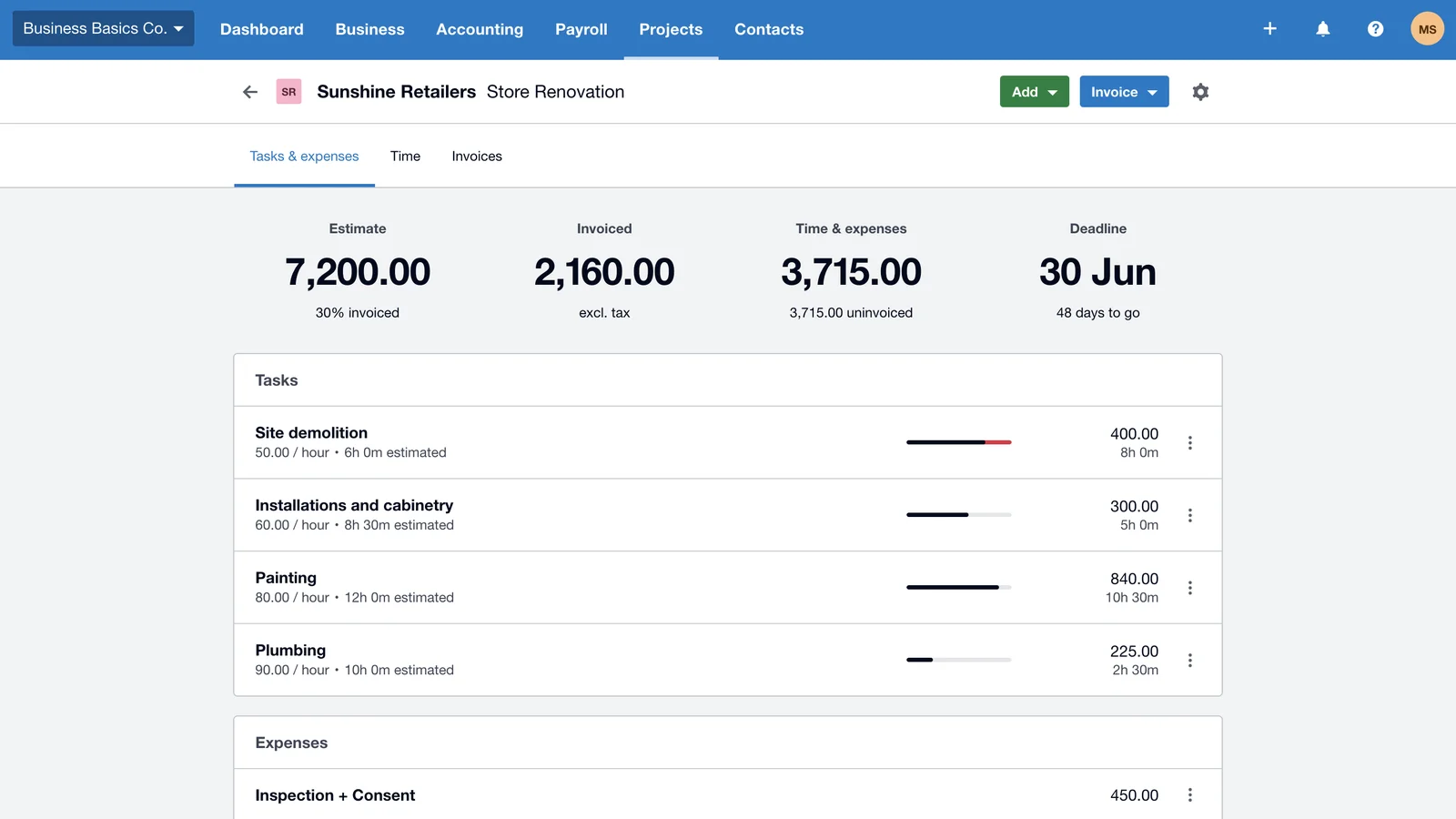
- 2. Let the project tool push clean data to accounting. A professional services automation (PSA) tool such as BigTime organises time, expenses, projects and invoicing; its integration page says it powers the accounting system with "time tracking, billing, and invoicing information from BigTime". It connects to QuickBooks Online and Desktop and Sage Intacct, and lists a Xero connector with BigTime Enterprise PSA. That cleans up the project side of the close and nothing more: BigTime's own pages do not describe bank reconciliation or closing the books.
- 3. Confirm milestones and unbilled work before month-end, not during it. Someone has to sign off which milestone was reached before an invoice goes out or revenue is recognised, and logged-but-uninvoiced hours have to land in the right month. Put both on the project leads' calendar for the last week of the month.
- 4. Capture documents where they are created. Receipts and supplier bills should be sent from a phone the day they arrive, not found in an inbox on day three of the close. Do not wait for Xero to do this over WhatsApp: on 17 June 2026 a Xero community manager wrote on its product ideas forum that sending invoices through WhatsApp "isn't a direct feature available in Xero right now" and is not currently planned. The useful direction is the reverse anyway: staff send receipts, bills and approvals through WhatsApp and they land in Xero coded and ready for review. That is the kind of workflow Biks builds on top of Xero.
- 5. Reconcile every day and let the software clear the routine lines. Connect the bank feeds. Xero's JAX auto bank reconciliation categorises and matches bank lines, reconciles on its own only when it is highly confident, and labels each decision as a rule, a match to an existing document, memory of your past choices, or a prediction from how other Xero users reconcile. Xero says it auto-reconciles over 60% of the transactions it sees at about 96% accuracy, based on April to July 2026 data; check Xero's plan page for which plans include it. Intuit announced in July 2025 that its QuickBooks Online accounting agent categorises transactions and helps with reconciliation.
- 6. Write the matching rules down once. Which client pays from which account, which supplier maps to which code, what difference is too small to chase. Rules are what turn a payment with no reference into a line that matches itself next month.
- 7. Review exceptions, not everything. Give one named person the list of lines the rules could not match, and close the month when that list is empty.
Worked example: a law firm's 20-hour reconciliation week
Before: more than 20 hours a week of reconciliation, split across four people with other jobs, and nobody owning the process. After: under 30 minutes a week of review by one person. The workflow went live after 2 weeks of building and 4 weeks of validation. The full story is in the law firm reconciliation case study.
The same approach scales to project billing. At a professional services firm where billing lines were checked by hand project by project, nearly 300 billing lines across 18 projects were matched in one run. In each case the system prepares the match and a person approves anything unclear, and these workflows go live in weeks, not months. More on how it works on our finance and accounting page, and for the wider sector picture see the professional services page.
The mistakes that keep firms closing late
- Buying a PSA tool and expecting a faster close: It fixes time and billing. The bank lines, missing receipts and exceptions are still waiting in the accounting system.
- Expecting AI reconciliation to find what is missing: If a receipt is still on an engineer's phone or a client paid without a reference, the software can only flag the line. That gap is where most close days are lost.
- Saving all the matching for month-end: A month of bank lines reconciled in one sitting turns the close into a catch-up. Daily matching leaves month-end holding only the exceptions.
- Letting everyone own a piece: Four part-time reconcilers means nobody owns the list. One named reviewer with an exceptions list closes faster.
- Checking every line by hand: If routine lines are already matched by rules or software, reviewing them again only adds days.
Sources
- CFO.com (APQC): Metric of the month: cycle time for monthly close
- BigTime Software: BigTime integrations (partner marketplace)
- Xero: Automatic bank reconciliation with JAX (Singapore)
- Intuit: Intuit introduces virtual team of AI agents for QuickBooks (July 2025)
- Xero Product Ideas: Contacts: send invoices and statements through WhatsApp
Common questions
- Why do engineering consulting firms struggle with month-end close delays?
- Their revenue and costs sit inside projects, and project data reaches finance late: timesheets after the cut-off, subcontractor and site costs that arrive weeks later, milestones waiting for sign-off, and client payments matched to invoices by hand. The close is late before accounting even starts.
- How long should a month-end close take?
- In APQC's benchmark of 2,300 organisations, the median monthly close took 6.4 calendar days and the top quarter 4.8 days or less; the slowest quarter took 10 days or more. Small firms that keep data current all month can have books ready for review within a few working days.
- Can BigTime help with month-end close delays?
- With the project side. BigTime organises time, expenses, projects and invoicing and passes them to QuickBooks, Sage Intacct or, on Enterprise PSA, Xero. Its pages do not describe bank reconciliation or closing the books, so that work still happens in the accounting system.
- What accounting software uses AI to categorise transactions and reconcile accounts?
- Xero's JAX auto bank reconciliation categorises and matches bank lines and reconciles on its own only when highly confident; Xero cites over 60% auto-reconciled at about 96% accuracy. Intuit's QuickBooks Online accounting agent also categorises transactions and assists with reconciliation.
- Does Xero have a WhatsApp integration?
- Not natively. In June 2026 Xero said sending invoices through WhatsApp is not a direct feature and not currently planned; it suggests sharing an invoice link from the Xero mobile app. Third-party tools and custom workflows can connect WhatsApp to Xero for reminders, receipts and approvals.