What an AI Executive Assistant Actually Does in a Week

An AI executive assistant is software that holds the context of your working week and completes the small, recurring work around your decisions: reading documents, pulling numbers, drafting, briefing, and chasing what is outstanding. It is not a chatbot you visit with questions. It is a party that already knows what you are working on.
Ask a director what took their week and you hear about the decisions. Ask the person who supports them and you hear something else entirely: the contract that had to be read before Thursday, the three numbers pulled out of a supplier spreadsheet, the follow-up nobody sent, the board deck rebuilt the night before.
None of that work is difficult. All of it is load-bearing. And when there is no assistant, it does not disappear. It moves into the director’s evenings.
A week, in the order it actually arrives
- Monday, 07:40. A briefing lands before the first meeting: what moved over the weekend, what is waiting, what needs a decision today. Fifteen minutes of reading replaces an hour of asking.
- Tuesday. A forty-page supplier agreement arrives as a photograph of a printout. It comes back as five bullet points, with the two clauses that differ from last year’s version marked.
- Wednesday. Numbers from three spreadsheets that do not agree. The disagreement is the finding, and it goes in the note rather than being quietly averaged away.
- Thursday. A board pack, assembled from material that already existed in four places, in the format the board already reads.
- Friday. The follow-ups. Who owes what, who was promised an answer, and what becomes embarrassing on Monday if it stays unsent.
Why five tools do not add up to one assistant
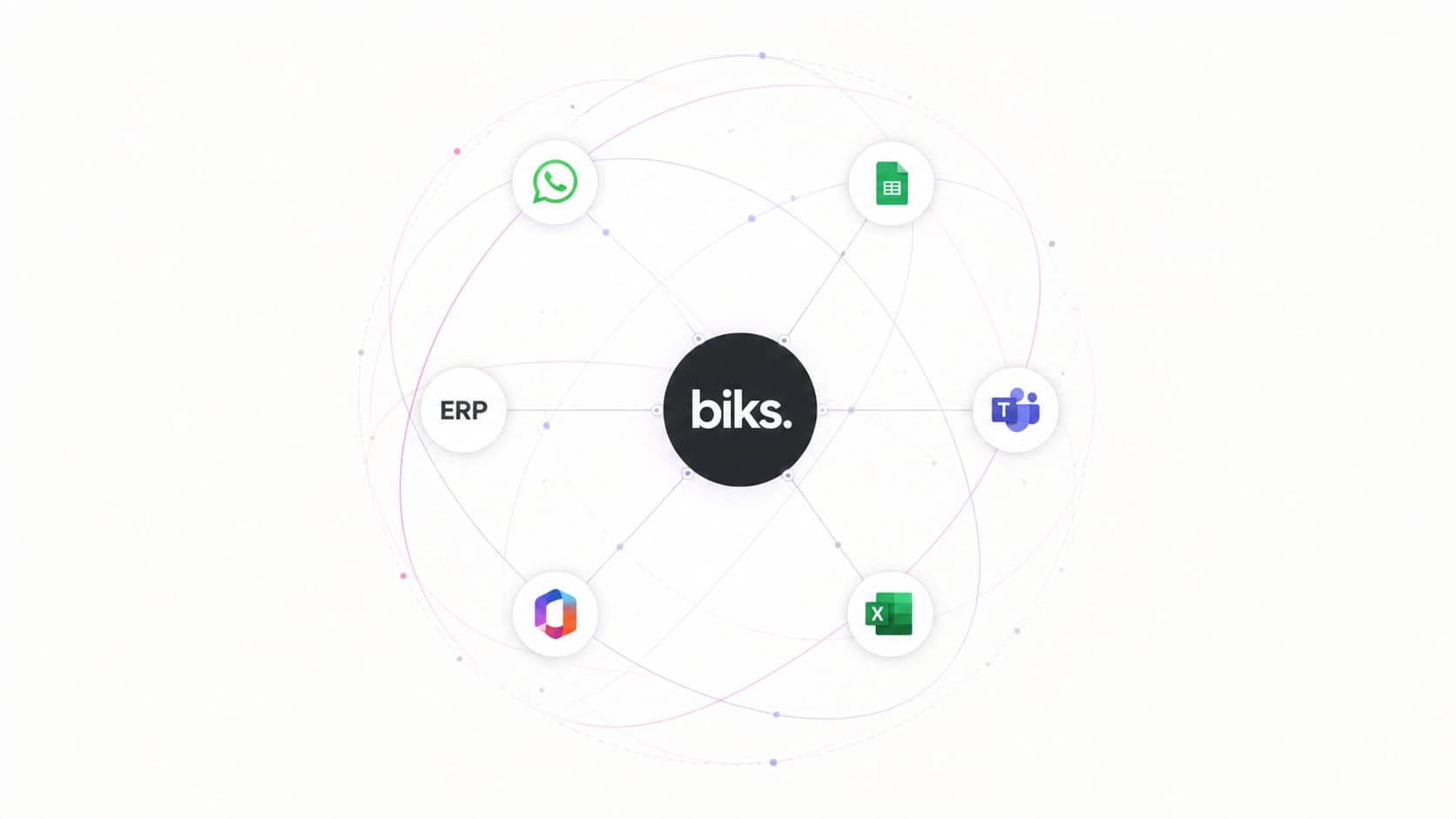
Every item above has been automated before, separately. There are products that summarise contracts, products that build decks, products that chase follow-ups. Adopting five of them means five logins, five interfaces, and five places to check, which is precisely why most directors keep doing the work themselves.
What makes an assistant an assistant is not any single capability. It is that one party holds the context for all of it and reaches you where you already are. That is why Rapi works inside WhatsApp: it reads what you forward it, including PDFs, spreadsheets, presentations, screenshots, photos, receipts and handwritten notes, and returns finished work in the same thread you sent it from.
The channel matters more than it sounds. An assistant you have to remember to open is an assistant you use twice and abandon. An assistant in the thread you are already in gets used forty times a week.
What it is worth in hours
The tasks above are individually small, which is exactly why they are underestimated. A twenty-minute document read, done four times a week, is more than sixty hours a year. A weekly board or management pack rebuilt by hand is closer to a hundred. Follow-ups are worse, because the cost of missing one is not measured in time at all.
Across the businesses Biks works with, the pattern is consistent: the hours that disappear are never in one place, which is why they never get resourced. Nobody hires a person for four hours a week of document reading. So the director absorbs it, and it shows up as evening work rather than as a line in a budget.
The test for whether it is working
Not how impressive the output looks. Whether the evening work stopped. If the deck still gets rebuilt at 11pm on Wednesday, nothing has changed, however good the summary was.
Start with one recurring task rather than everything at once. The Monday briefing is usually the right first choice, because it runs every week, it is easy to judge, and a bad one is obvious immediately.
“Unlike general-purpose AI, Rapi understands exactly what I need, and works the way I do.”
Common questions
- What is an AI executive assistant?
- An AI executive assistant is software that holds the context of your working week and completes recurring work around your decisions: reading and summarising documents, preparing briefings, drafting communications, tracking follow-ups and producing finished reports. Unlike a general chatbot, it carries context between conversations and reaches you in the channel you already use.
- How is an AI executive assistant different from ChatGPT?
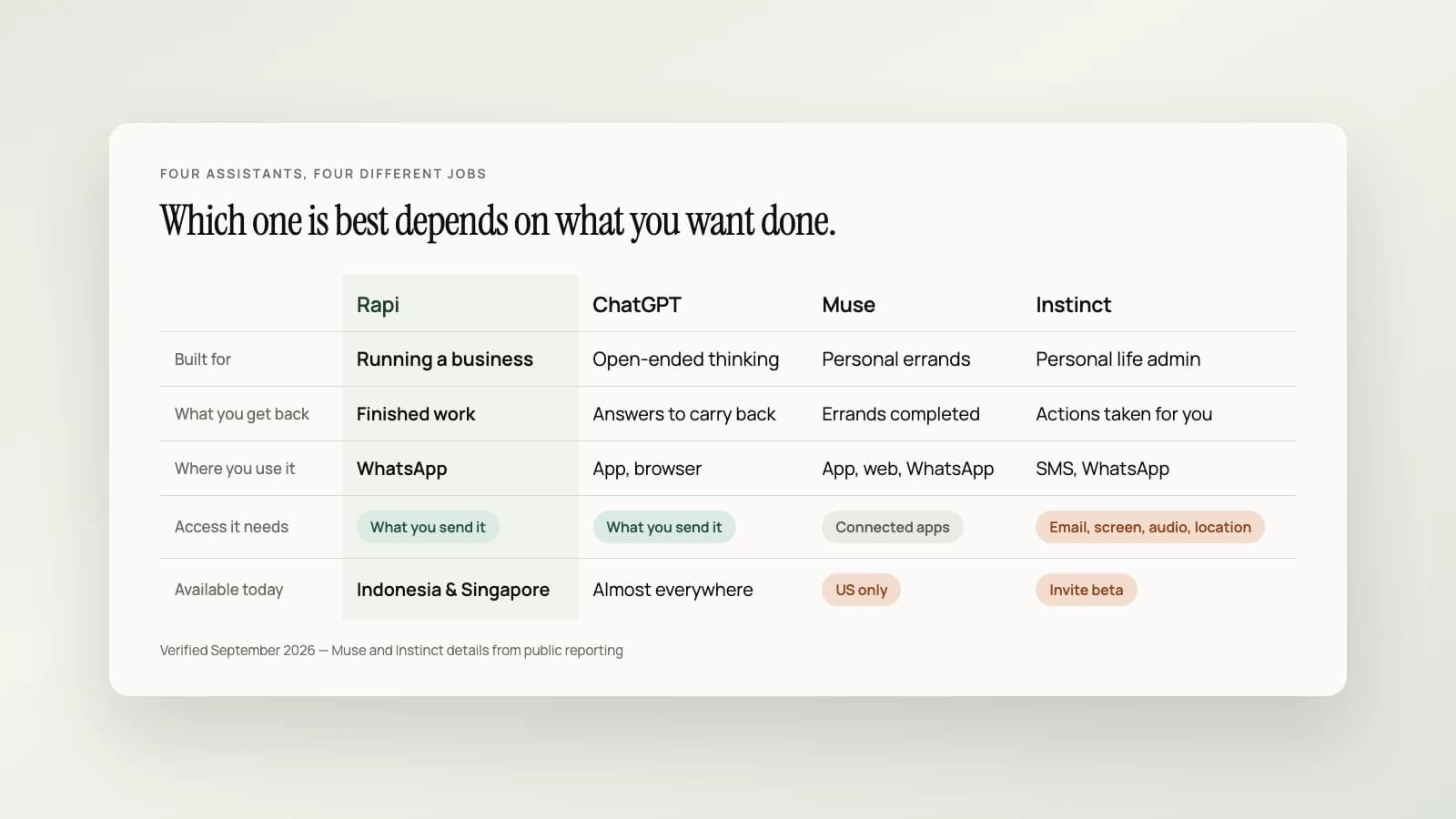
- ChatGPT is a general-purpose assistant you open and ask. An AI executive assistant is designed to work continuously alongside you: it learns how you work, carries context across conversations, runs scheduled tasks such as a Monday briefing, and contacts you rather than waiting to be opened. Rapi does this inside WhatsApp.
- What kinds of files can Rapi read?
- Rapi reads PDFs, Word documents, spreadsheets, presentations, screenshots, photos, receipts and handwritten notes. You forward the file in WhatsApp and the finished work comes back in the same conversation.
- Where should a business start?
- Start with one recurring task rather than everything at once. A weekly briefing is usually the best first choice because it runs every week, it is easy to judge, and a poor result is obvious immediately.