The Minister Who Codes
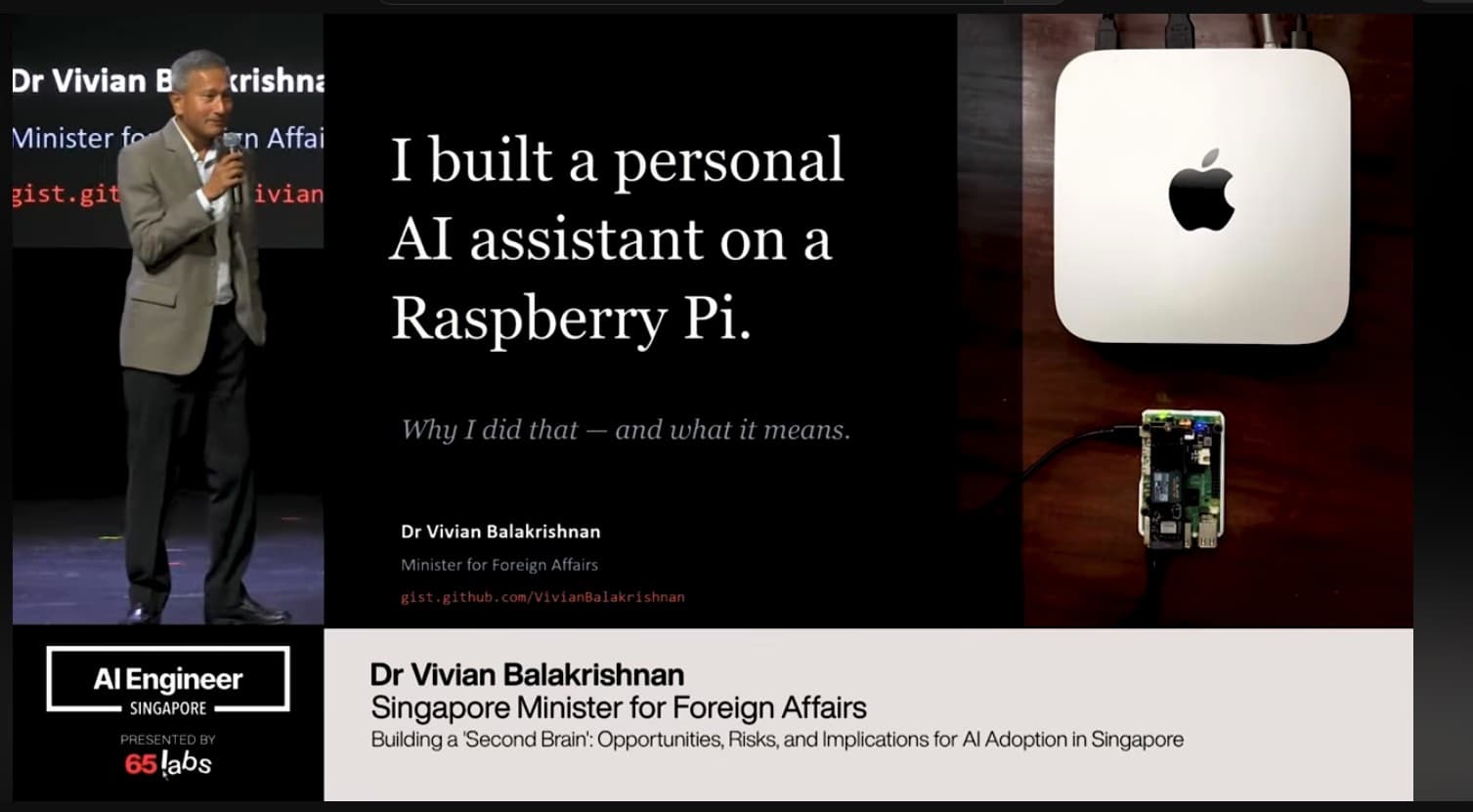
A personal AI assistant does not have to begin as a large transformation programme. It can begin with one person, one recurring need, and the willingness to build a working answer.
Singapore's Foreign Minister did exactly that—and then made the blueprint public so others could inspect the idea rather than simply hear about it.
Why building it yourself matters
The useful lesson is not that every leader should become a full-time developer. It is that direct experimentation makes the limits and possibilities of AI concrete. The builder has to decide what information the assistant should use, what it should return, and where human judgement still belongs.
That turns AI from an abstract capability into a designed workflow. The value comes from the decisions around the model, not from the model alone.
What teams can take from it
- Start with one repeated task: A narrow job is easier to test, improve, and trust.
- Keep the workflow inspectable: A published blueprint makes the choices visible and open to critique.
- Build around judgement: The assistant should support decisions without hiding how the work moves.
The strongest AI projects often begin this way: a useful problem, a small working system, and enough openness for other people to learn from it.