Project NUSA: Open Rails, Access Details Still Thin
That distinction matters. The announcement points toward shared rules, reusable governance and locally relevant knowledge, but it does not give an SME an application form, a public repository, technical documentation, eligibility criteria or a delivery date. Owners should prepare the workflow and evidence that would make those foundations useful, without presenting Project NUSA as a service already available.
The near-term opportunity is operational: choose one customer or back-office job, identify the records it is allowed to use, decide where a person approves the outcome and measure whether the job actually finishes. That preparation is useful whether Project NUSA later provides a framework, a dataset, a tool or a route into a pilot.
Key takeaways
- Foundations before access details: Project NUSA was announced as a cross-border initiative for AI governance and local knowledge; the checked launch materials do not identify a public application route or repository.
- Two tracks: Launch reporting says the initiative centres on Open-Source AI Governance and Open Data and AI-Ready Knowledge.
- Human control stays central: Direct event reporting describes ethical governance, human involvement and layered handling that keeps sensitive data within each country.
- Prepare one job now: A documented workflow, approved data sources, exception rules and an accountable owner will matter more than a broad “AI strategy”.
- Watch for proof: Before budgeting around NUSA, wait for a named artefact, access route, licence, pilot scope and accountable operator.
What is Project NUSA?
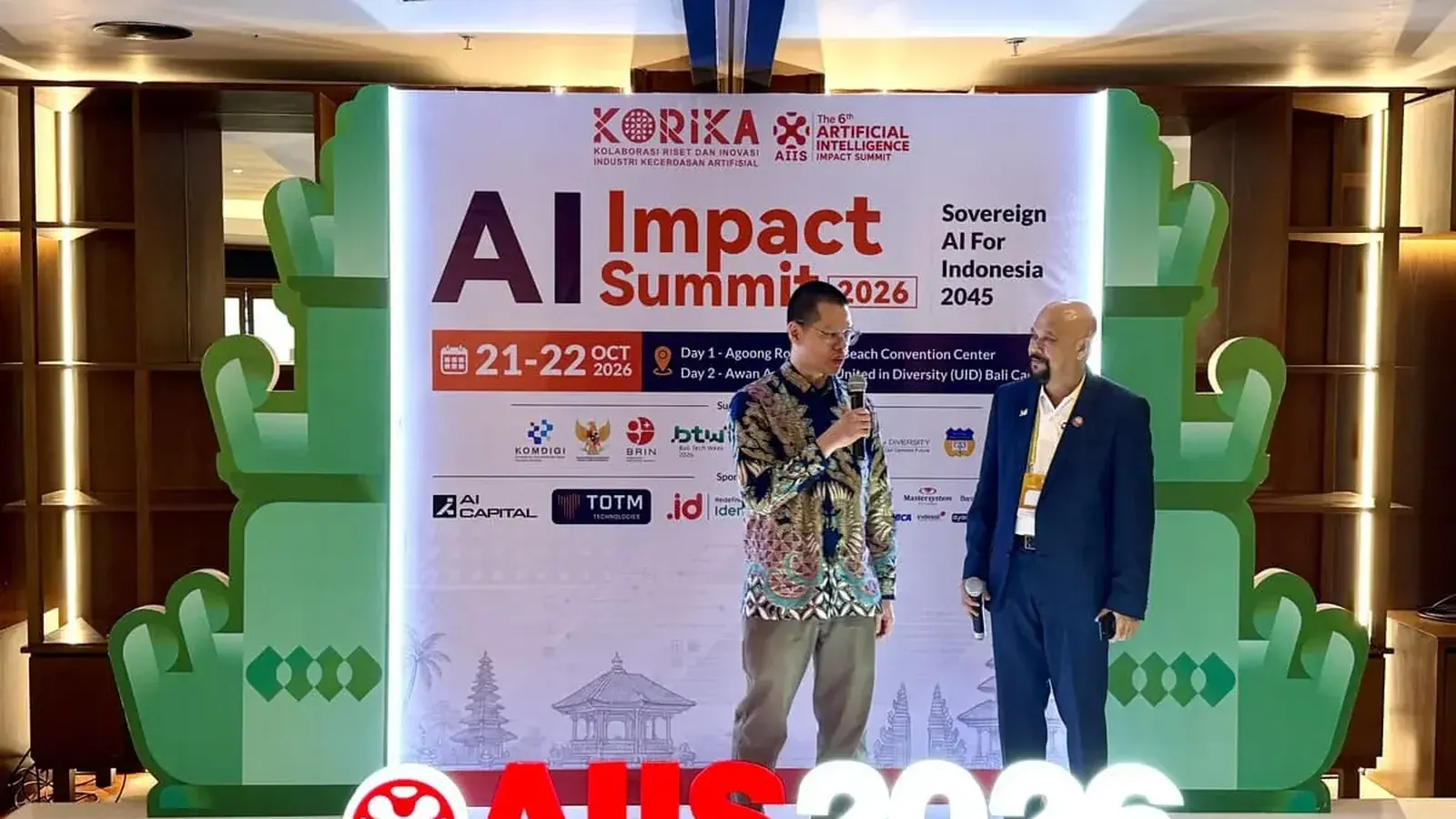
Project NUSA stands for Network of Unified and Secure AI. ANTARA reported its launch at the AI Impact Summit in Bali on October 21, 2026 as a collaboration between Indonesia and Singapore intended to connect government, industry, universities and communities around AI governance, applications and adoption.
The Indonesian Coordinating Ministry for Economic Affairs names Project NUSA among the practical initiatives supporting safer, trusted AI and collaboration between the two countries. KORIKA's official summit programme places it among the event's four launches.
The most useful description comes from the two foundations reported by Bisnis.com: Open-Source AI Governance, covering access, oversight and accountability for AI agents; and Open Data and AI-Ready Knowledge, intended to turn lawfully shareable data into trusted knowledge that reflects local language, regulation and context. The reported layered approach keeps sensitive data in its country of origin.
What did Project NUSA actually launch?
The announcement is significant, but its published scope is still earlier than a product launch.
| Published on launch | Not published yet | SME interpretation |
|---|---|---|
| A joint Indonesia–Singapore initiative | Public application or account | There is nothing to enrol in yet |
| Open governance and local-knowledge foundations | Downloadable framework, dataset or licence | Do not design around an artefact you cannot inspect |
| Human involvement and layered data handling | Technical controls or certification process | Keep your own approval and data boundaries |
| An initial multi-sector participant group | Open SME pilot criteria or timetable | Wait for a named route and owner before budgeting |
Launch coverage names an initial group spanning industry, technology and education, with participation across both countries. The checked reports do not identify a public SME onboarding path. This is why “open” should be read as the intended development model, not as proof that every output is already public, free to reuse or ready for production.
What can Singapore SMEs do before Project NUSA opens?
- 1. Pick one completed outcome. Start with a job such as resolving an order-status question, qualifying a service enquiry or preparing an overdue-invoice follow-up. Name the finish line and the person accountable for it.
- 2. Mark the source of truth. List the CRM entry, Xero record, policy document, shared folder or approved product catalogue the agent may consult. Decide which record wins when two sources conflict.
- 3. Separate usable from restricted data. Record which fields are necessary for the job, why they are used, who may see them and when they should be removed. Keep real customer data out of early tests.
- 4. Place approval before consequence. Sending a commitment, changing an order, issuing a refund or sharing personal data should stop for the named owner. Give the reviewer the proposed action and its evidence.
- 5. Test exceptions, not only the demo. Use duplicate orders, missing attachments, mixed languages, contradictory records and requests outside policy. Track wrong answers, missed handoffs and correction time.
Singapore businesses do not need to wait for Project NUSA to apply this discipline. IMDA says its open-source AI Verify toolkit assesses systems against governance principles including transparency, safety, security, data governance, accountability and human agency. Its agentic-AI guidance also centres on bounding risk and making people accountable at meaningful checkpoints.
For a workflow that starts in WhatsApp, the same preparation becomes a practical brief for a customer operations AI agent: approved knowledge, a narrow job, visible evidence and a clean human handoff. The agentic AI governance checklist adds the controls to test before any production rollout.
How should an SME judge the next Project NUSA update?
Look for five concrete items: the artefact being released, who operates it, who may access it, the terms for data and reuse, and evidence from a real workflow. A repository without a licence is not reusable; a governance statement without tests is not assurance; a pilot without entry criteria is not an SME programme.
Then compare the promised output with the job you mapped. Local-language knowledge may help an agent interpret Indonesian or Singapore context, but it will not automatically know your refund rule, live stock, customer consent or who may approve a credit note. Shared governance may reduce duplicated work, but your company still owns its permissions, records and customer outcomes.
Project NUSA is worth watching because Indonesia and Singapore are trying to make governance and local knowledge shared infrastructure rather than an afterthought. The honest position on October 24 is equally important: the rails have been announced, while the public access route has not. Prepare a small, measurable workflow now; commit only when the next release supplies something your team can inspect and test.
Sources
- Kementerian Koordinator Bidang Perekonomian Republik Indonesia: Tegaskan Empat Prioritas Strategis, Pemerintah Bersiap Wujudkan Kedaulatan AI dan Transformasi Digital
- KORIKA: AI Impact Summit 2026: Sovereign AI for Indonesia 2045
- ANTARA News Bali: Indonesia-Singapura resmi luncurkan Project NUSA bangun tata kelola AI dan data terbuka
- Bisnis.com: KORIKA dan AI Singapore Rilis Project NUSA, Bidik Peluang Ekonomi Berbasis AI
- Infocomm Media Development Authority: Artificial Intelligence in Singapore
Common questions
- What is Project NUSA?
- Project NUSA, short for Network of Unified and Secure AI, is a KORIKA and AI Singapore initiative launched on October 21, 2026 to develop shared foundations for open AI governance and trusted local knowledge across Indonesia and Singapore.
- Can Singapore SMEs join Project NUSA now?
- The checked launch materials did not identify a public SME application, account, pilot criteria or access timetable by October 24, 2026. SMEs should seek an official access route before treating the launch as an open programme.
- What are Project NUSA's two foundations?
- The two published foundations are Open-Source AI Governance, focused on access, oversight and accountability, and Open Data and AI-Ready Knowledge, focused on trusted, lawfully shareable local knowledge for AI systems.
- What should an SME prepare for Project NUSA?
- Prepare one bounded workflow, its approved sources of truth, necessary data fields, exception cases, human approval points and a measurable finish. This remains useful even if Project NUSA's first public output is a framework rather than a product.